
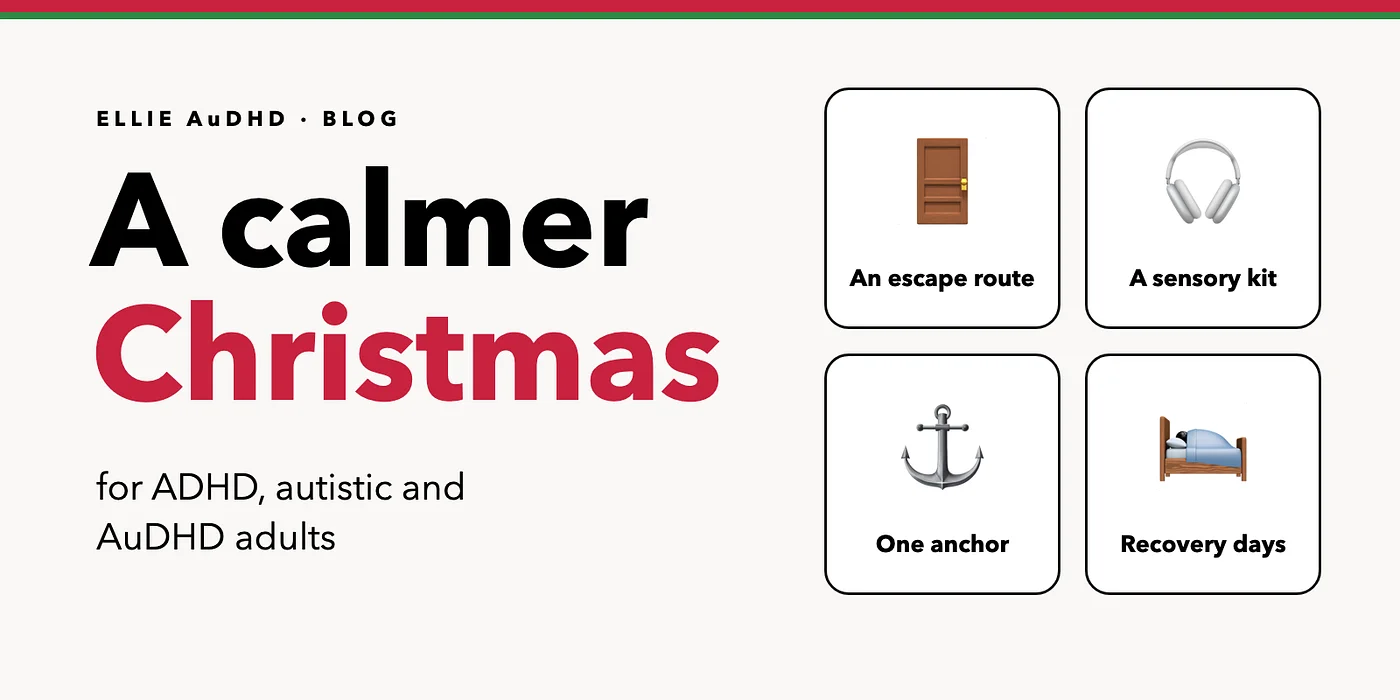
A calmer Christmas for ADHD, autistic and AuDHD adults
Christmas is lovely for some people. For a lot of ADHD, autistic and AuDHD adults it's also loud, bright, expensive and full of people asking what you've been up to. The routine goes, the house fills up and somehow you're meant to enjoy all of it at once.
If December feels like a lot, you're not ungrateful and you're not a Grinch. Your brain is dealing with more noise, more change and more decisions than usual. Here are some small ways to make it kinder.
This is a practical, non-clinical guide. It isn't therapy or medical advice. If you're struggling with your mental health, please speak to your GP or another qualified professional.
Why Christmas can feel so hard
The routine disappears. Normal days have shape. Over Christmas the usual times for eating, sleeping and being on your own can all move at the same time.
Everything is turned up. Lights, music, smells, scratchy jumpers and several conversations at once. Sensory overload can build up quietly and then arrive all in one go.
There's so much to organise. Presents, food, travel, cards and replies all lean on planning and remembering, which is often the hardest part for an ADHD brain.
You might be masking. Smiling through it, keeping up with small talk and looking pleased on demand takes energy. It makes sense if you're exhausted afterwards.
Eight ways to make it calmer
1. Plan your escape route. Before you go anywhere, decide how you'll leave and when. Park where you won't be blocked in, know the last bus or ask for a lift in advance. It's easier to stay when you know you can go.
2. Borrow a script. Have a few lines ready so you don't have to think of them on the spot. "I'm popping out for some air." "We can only stay for an hour." "Thank you, that's not for me but it smells lovely."
3. Pack a sensory kit. Earplugs or headphones, sunglasses, something to fidget with, a soft layer and a snack you know you'll eat.
4. Keep one anchor. You may not be able to keep your whole routine, so choose one bit of it. The same breakfast, a walk, a bath or your usual bedtime.
5. Take the pressure off presents. Set a limit, use gift cards, buy the same thing for everyone or agree not to do presents this year. If you've left it late, you're in very good company.
6. Let food be simple. You don't have to eat a full Christmas dinner for it to count. Beige food is allowed. So is eating in another room.
7. Book in recovery days. Put them in the diary as real plans. A busy day often needs a quiet one after it.
8. Say no to one thing. Pick the thing you're dreading the most and see if it can be shorter, smaller or skipped.
If someone you love is neurodivergent
Tell them the plan in advance, including when it ends. Give them somewhere quiet to go without having to explain why. Don't make them open presents in front of everyone and don't take it personally if they leave early. Staying for an hour and enjoying it beats staying all day and burning out.
What if it all goes wrong?
You forgot the card. You cried in the bathroom. You went home before pudding. None of that means you've failed at Christmas. Doing less is still Christmas, and you're allowed to make it look however you need it to.
You don't have to do December on your own
If you'd like some company, the Ellie AuDHD Forum is open for AuDHD, ADHD and autistic adults, and the first 2,000 people are free for life. If you'd like one-to-one help with getting through the list, Ellie is a late-diagnosed AuDHD woman who offers friendly, judgement-free mentorship and accountability, with no diagnosis needed. You can see prices and book here.
You might also like Stuck at the start line? Why task starting is so hard with ADHD.